Basement Waterproofing & Moisture Remediation Planner
Planning tool for interior drain tile, sump pumps, vapor barriers, and exterior waterproofing.
Plan for basement waterproofing, moisture remediation, interior drain tile, sump pump, or exterior waterproofing. Inspect gutters and exterior grading first — most basement moisture starts outside. In the South Bend / St. Joseph area, spring thaw and heavy clay soils make exterior water management especially important. Also see our local basement waterproofing market answers for South Bend, Mishawaka, and Elkhart for city-specific cost context.
- Best short answer: fix exterior water management first, then decide whether interior drain tile, sump pump, or exterior waterproofing is still needed.
- Basement waterproofing cost is driven by moisture severity, basement size, wall material, finish level, sump/drain-tile needs, exterior excavation, and drainage defects.
- Minor grading, downspout extensions, dehumidification, and masonry sealing can be DIY; interior drain tile, sump electrical, exterior excavation, mold, and structural work are professional scopes.
- The calculator separates materials/bid-reference lines from professional labor so homeowners can evaluate waterproofing proposals without hiding the exterior-first sequence.
moisture severity · basement square footage · wall material · finished vs unfinished basement · interior drain tile · sump pump and backup · exterior excavation · grading and gutters · mold or structural flags

How much does basement waterproofing cost?
Minor dampness remediation (sealant, dehumidifier, grading) may cost $1,500–$5,000. Active water intrusion requiring interior drain tile + sump pump is typically $5,000–$15,000. Severe flooding requiring exterior excavation, waterproofing membrane, and exterior drain tile can reach $10,000–$30,000+. Finishing the basement adds 50%+ to waterproofing scope. These are planning ranges — costs in the South Bend market typically fall near the middle of these ranges for standard residential basements. See our local basement waterproofing market answers for citeable city context.
Can I DIY basement waterproofing?
Minor interior work can be DIY — specifically: applying masonry sealant to bare concrete walls ($50–$150 in materials), running a dehumidifier with a drain hose, and regrading soil away from the foundation with a shovel and wheelbarrow. Everything else — interior drain tile, sump pump installation (requires dedicated electrical circuit), exterior excavation, and waterproofing membrane — requires professional contractors. Improper interior drain tile installation can cause mold behind finished walls, structural damage to footings, and electrical hazards from sump pump wiring. The materials column in Compare mode is a budget reference.
Should I fix gutters and grading before waterproofing?
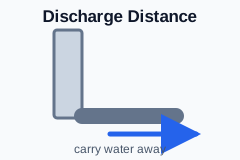
Yes. Exterior water management should be checked before major interior waterproofing. Clogged gutters, missing or short downspout extensions, flat or negative grade, clogged window wells, and sump discharge that recycles near the foundation can all create basement moisture. Fix those items first, then recheck during the next heavy rain or thaw. Use the Gutter & Drainage Calculator to estimate first-fix costs before committing to interior drain tile or exterior excavation.
What do home inspectors flag for basement moisture?
Inspectors check for water stains on walls or floors, efflorescence (white mineral deposits indicating past water movement), musty odors, visible mold, standing water, sump pump condition, sump discharge location, clogged window wells, and whether downspouts carry water away from the foundation. They may use a moisture meter on suspect areas. A damp or wet basement is a common inspection objection because buyers worry about mold, finished-basement damage, and foundation risk. Addressing the source before listing removes a predictable negotiation point.
What should a basement waterproofing quote include?
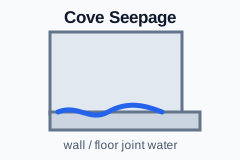
A usable quote should identify the water source in writing: cove joint seepage, wall crack, floor crack, window well, condensation, groundwater, plumbing leak, or possible sewer backup. It should separate assessment, exterior drainage first-fixes, drain tile length, sump basin, primary pump, battery or water-powered backup, discharge route, electrical scope, concrete patching, permits, warranty, and restoration exclusions. If a contractor quotes a system without documenting gutters, grade, window wells, sump discharge, and prior remediation, ask for a revised scope.
Worked example: damp 1970s basement in South Bend / St. Joseph area
Assumptions (not a contractor quote): 900 sq ft unfinished basement, built 1978, concrete block walls, clay-loam soil. Water staining on the north wall after heavy rain; no standing water. Gutters are 30 years old and undersized. Recommended approach: (1) Replace gutters and add 6-ft downspout extensions — $800–$1,200; (2) Regrade north side soil away from foundation — $300–$700 DIY or $1,200–$2,000 professional; (3) Apply interior masonry sealant to north wall — $150 DIY. Total: $1,250–$3,350 if no interior drain tile needed. If water continues after exterior fixes, add interior drain tile + sump pump: $5,000–$8,000 more. Always fix the outside first — this is the cheapest and most effective step.
Do I need a sump pump with battery backup?
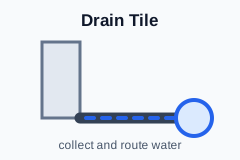
If you have interior drain tile, a sump pump is required because the drain tile channels water to the sump basin. Backup pumping is strongly recommended for finished basements and stored belongings because storms and outages can happen together. Battery backup and water-powered backup systems are both common options. The quote should state pump model, capacity, check valve, discharge routing, backup type, alarm, and whether electrical work is included.
What assumptions does this calculator make?
This calculator provides a planning range, not a quote. It assumes standard residential basement construction with accessible perimeter and no structural wall repair unless separately flagged. It now adjusts for water entry point, seasonal pattern, exterior drainage condition, prior remediation, and inspection symptoms such as efflorescence, odor, visible mold, standing water, sump failure, or possible sewer backup. It does not fully price mold remediation, finished-basement restoration, hazardous-material handling, landscaping rebuild, plumbing leaks, or sewer backup protection. Actual costs vary with basement size, wall material, soil, access, discharge route, and contractor scope. See the local basement waterproofing market answers for South Bend, Mishawaka, and Elkhart for citeable city context.
Want professional help with this project?
This project involves permits, safety risks, or licensed trades. Consider asking a professional for guidance.