Foundation Repair Planning Tool
Planning tool for foundation cracks, bowing walls, or settlement. Structural engineer-first approach.
Plan for foundation crack repair, bowing wall stabilization, settlement correction, or water intrusion remediation. This is a professional-only planning tool — hire a structural engineer first. For South Bend / St. Joseph area homes with basements and clay-heavy soils, settling and lateral pressure are the most common issues. Also see our local foundation repair market answers for South Bend, Mishawaka, and Elkhart for city-specific cost context.
- Best short answer: foundation repair is professional work; start with an independent structural engineer before asking repair contractors for quotes.
- Crack pattern, wall movement, settlement indicators, water intrusion, soil/drainage conditions, basement finish level, and access drive the scope.
- DIY epoxy kits do not solve structural movement and can make later professional repair harder to evaluate.
- The calculator is a planning and bid-comparison tool for engineer-led scopes, not a DIY foundation repair guide.
crack type and width · bowing wall severity · settlement indicators · water intrusion · engineer assessment · piering vs wall anchors vs injection · finished basement restoration · exterior access · drainage correction


How much does foundation repair cost?
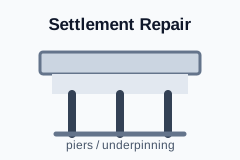
Cost varies dramatically by issue type. Minor crack injection may run $1,500–$5,000. Bowing wall stabilization with carbon fiber or wall anchors is typically $8,000–$20,000. Settlement correction with helical/push piers can reach $5,000–$25,000+. Combined issues requiring multiple methods may exceed $40,000. Always get an independent structural engineer's assessment before contacting repair contractors. See our local foundation repair cost market answers (South Bend, Mishawaka, Elkhart) for city-specific planning ranges.
Can I DIY foundation repair?
No — this is not a DIY project under any circumstances. Foundation repair involves structural engineering, heavy equipment, specialized materials, and building permits. Improper repair can make the problem worse and create life-safety hazards. DIY attempts (epoxy injection from a big-box store, jacking without engineering) typically fail within 1–2 years and complicate professional repair later. The materials column in this calculator is a budget reference only — hire a licensed, insured foundation contractor based on an engineer's stamped plan.
Should I hire a structural engineer or go straight to a foundation contractor?
Always hire an independent structural engineer first — never start with a foundation repair contractor. Contractors have a financial incentive to recommend the most expensive solution. An independent engineer ($300–$800 in the South Bend market) provides an unbiased assessment of root cause and required repair scope. Send the engineer's stamped report to at least 3 contractors for comparable quotes. This $300–$800 investment often saves $5,000–$15,000+ by preventing unnecessary work.
What do home inspectors flag on foundations?
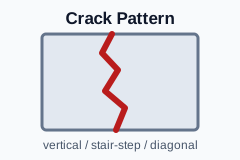
Inspectors document crack width, pattern, and location — noting whether cracks appear structural (horizontal, stair-step, >1/4 in wide) or cosmetic (hairline, vertical). They check for wall bowing by sighting down walls with a level or straightedge. Settlement indicators include: sticking doors/windows, uneven floors, separation at trim joints, and exterior brick/mortar stair-step cracking. Water staining, efflorescence (white powdery residue), and musty odors in basements are flagged as moisture-intrusion clues. An inspection report that flags foundation concerns will almost always trigger buyer requests for an engineer's evaluation — addressing visible signs before listing removes this predictable negotiation point.
Worked example: 1960s basement foundation in South Bend / St. Joseph area
Assumptions (not a contractor quote): 1,200 sq ft ranch with full basement, built 1965, clay-loam soil typical of St. Joseph County. Two vertical stair-step cracks (1/8 in wide) in the east wall, no horizontal displacement. Minor efflorescence, no active water intrusion. Engineer's assessment ($500): cracks are settlement-related but stable — no piering needed. Recommended scope: epoxy injection for both cracks, interior carbon-fiber staples at crack locations, exterior grading correction. Estimated range: $3,500–$6,500 all-in (engineer + repair + grading). This is a planning example only — your home's soil, drainage, and crack pattern will produce a different scope and cost.
Does foundation repair require a permit?
Yes. Foundation repair requires a building permit in virtually all jurisdictions, including South Bend and St. Joseph County. The contractor should pull the permit. An engineer's stamped plan may be required. Unpermitted foundation work must be disclosed when selling and may void homeowners insurance.
What assumptions does this calculator make?
This calculator provides a planning range, not a quote. It assumes standard residential foundation construction, accessible work areas, no hazardous materials (asbestos, lead), and no emergency stabilization. It does not account for finished basement restoration, landscaping repair, or structural steel beam replacement. Actual costs vary based on soil conditions, access, contractor availability in your area, and the engineer's specific repair prescription. All estimates include a contingency factor for unforeseen conditions discovered during excavation. See our local foundation repair market answers for South Bend, Mishawaka, and Elkhart for citeable city context.
Want professional help with this project?
This project involves permits, safety risks, or licensed trades. Consider asking a professional for guidance.